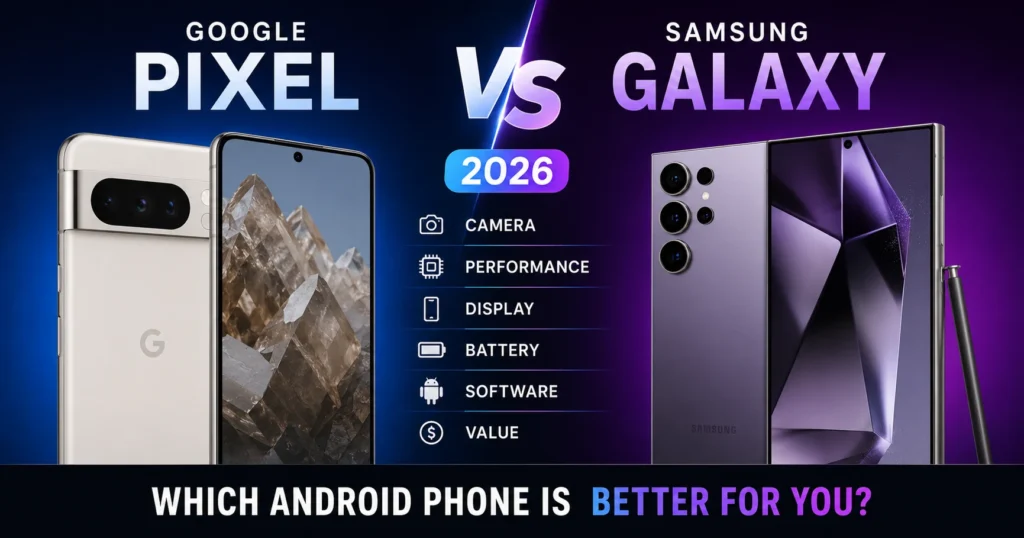
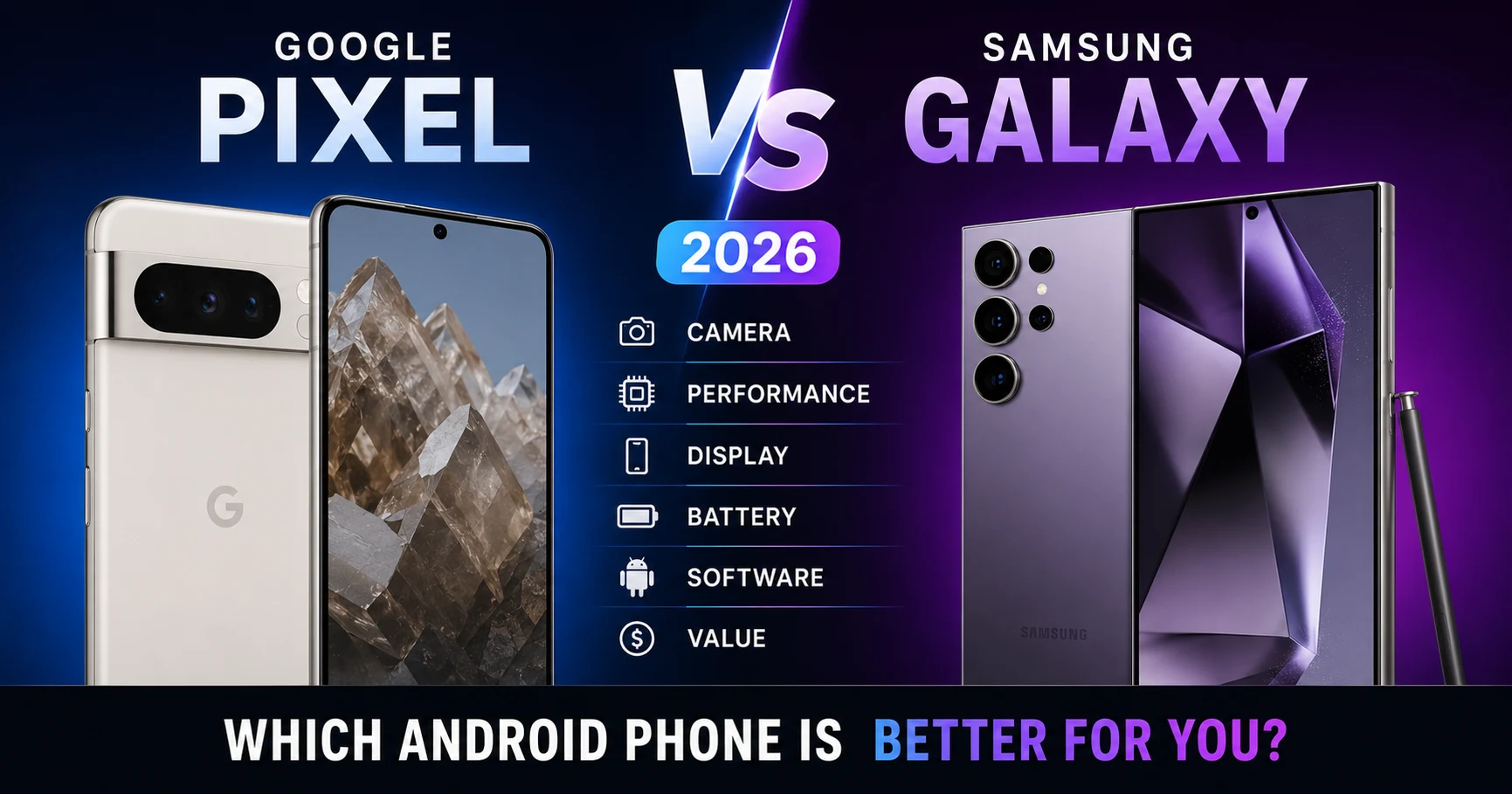
Google Pixel vs Samsung Galaxy is one of the biggest tech battle between these smartphones which continues to dominate the Android market in 2026. Both brands offer premium devices packed with cutting-edge technology, advanced AI capabilities, exceptional cameras, and powerful performance. However, choosing between a Google Pixel and a Samsung Galaxy smartphone depends on your priorities, whether it’s photography, software experience, gaming, productivity, or long-term value.
In this detailed comparison, we’ll explore the strengths and weaknesses of both smartphone giants to help you decide which one deserves a place in your pocket.
Google Pixel vs Samsung major differences
Design and Build Quality
Samsung has long been known for producing some of the most premium-looking smartphones in the industry. The latest Galaxy flagship devices feature sleek metal frames, durable Gorilla Glass protection, and vibrant color options. Samsung continues to refine its design language with thinner bezels and lighter builds.
Google Pixel devices, on the other hand, maintain a minimalist and clean aesthetic. While they may not always be as flashy as Samsung’s offerings, Pixel phones focus on practicality and comfort. Google’s signature camera bar design has become instantly recognizable and gives Pixel devices a unique identity.
Winner: Samsung Galaxy for premium design, Pixel for simplicity and ergonomics.
Display Technology
Samsung remains the undisputed leader in smartphone display technology. Most Galaxy flagship models feature Dynamic AMOLED displays with adaptive refresh rates up to 120Hz or higher, delivering vibrant colors, deep blacks, and exceptional brightness.
Google Pixel devices have significantly improved their displays in recent years, offering smooth refresh rates and excellent color accuracy. However, Samsung’s expertise in display manufacturing still gives it an edge in overall visual quality.
Winner: Samsung Galaxy
Performance and Hardware
Samsung flagship devices typically use the latest Snapdragon processors or advanced in-house chipsets depending on the region. Combined with generous RAM and optimized cooling systems, Galaxy phones handle gaming, multitasking, and demanding applications with ease.
Google Pixel smartphones use Google’s custom Tensor chips, designed specifically to enhance AI-powered features and machine learning tasks. While Tensor processors may not always outperform Snapdragon chips in raw benchmarks, they excel in real-world AI experiences such as voice recognition, image processing, and smart assistance.
Winner: Samsung for raw performance, Pixel for AI-focused performance.
Camera Comparison Google Pixel vs Samsung
Photography remains one of the most important factors when choosing a smartphone. This is where the Google Pixel vs Samsung Galaxy battle becomes intense.
Google Pixel Camera Strengths
Google Pixel phones are famous for computational photography. Advanced image processing allows Pixel devices to produce stunning photos with excellent dynamic range, realistic colors, and impressive low-light performance.
Key Pixel camera advantages include:
- Exceptional Night Sight photography
- Accurate skin tones
- Superior image processing
- AI-powered photo editing tools
- Best-in-class point-and-shoot experience
Samsung Galaxy Camera Strengths
Samsung takes a different approach by offering versatile camera systems with multiple lenses and powerful zoom capabilities.
Key Samsung camera advantages include:
- Higher megapixel sensors
- Superior optical zoom
- Advanced video recording features
- Rich and vibrant image output
- More manual camera controls
For casual photography enthusiasts, Pixel often delivers more consistent results. For content creators and users who enjoy zoom photography and video production, Samsung may be the better choice.
Winner: Pixel for photography, Samsung for versatility.
Software Experience
One of Google’s biggest advantages is its pure Android experience. This is one of the most important key aspect in Google Pixel vs Samsung battle.
Pixel devices receive Android updates directly from Google and often get new features before other manufacturers. The interface is clean, smooth, and free from unnecessary applications.
Samsung’s One UI has evolved significantly and is now one of the most polished Android skins available. It offers extensive customization options, multitasking tools, and productivity features that many power users appreciate.
Pixel Advantages
- Faster Android updates
- Clean software experience
- Exclusive Google AI features
- Minimal bloatware
Samsung Advantages
- More customization options
- Advanced multitasking
- DeX desktop mode
- Rich ecosystem integration
Winner: Tie depending on user preference.
Artificial Intelligence Features
Artificial intelligence has become a major selling point in smartphones.
Google leverages its expertise in AI and machine learning to deliver features such as:
- Real-time call screening
- Advanced voice typing
- AI photo editing
- Live translation
- Smart summaries
Samsung has expanded its Galaxy AI platform with tools including:
- AI-assisted note taking
- Translation services
- Productivity enhancements
- Intelligent photo editing
While Samsung offers a broad AI toolkit, Google’s deep integration with Android and cloud services gives Pixel a slight edge.
Winner: Google Pixel
Battery Life and Charging
Samsung generally provides larger battery capacities and faster charging technologies. Many Galaxy devices support high-speed wired and wireless charging options that can quickly restore power.
Pixel phones deliver solid battery life thanks to software optimization but often lag behind Samsung in charging speed.
Winner: Samsung Galaxy
Ecosystem and Accessories
Samsung offers one of the largest ecosystems in the Android world. Users can seamlessly connect Galaxy smartphones with tablets, laptops, smartwatches, earbuds, and smart home devices.
Google’s ecosystem continues to grow with Pixel Watches, Pixel Buds, and other smart devices. However, Samsung still maintains a broader and more mature ecosystem.
Winner: Samsung Galaxy
Pricing and Value
Pixel devices are often priced more competitively than equivalent Samsung flagship models. They provide flagship-level camera performance and software experiences at a lower cost.
Samsung offers a wider range of devices, from budget-friendly models to ultra-premium flagship smartphones.
Winner: Google Pixel for value.
Which Phone Should You Buy in 2026?
Choose a Google Pixel if you want:
- Outstanding photography
- Clean Android experience
- Fast software updates
- Advanced AI features
- Better overall value
Choose a Samsung Galaxy if you want:
- Premium display technology
- Powerful hardware
- Faster charging
- Better multitasking
- Extensive device ecosystem
Final Verdict
Both Google Pixel and Samsung Galaxy smartphones are excellent choices in 2026. Samsung continues to lead in hardware innovation, display quality, and ecosystem integration, while Google Pixel shines through intelligent software, exceptional photography, and AI-powered experiences.
In 2026, Google Pixel vs Samsung Galaxy remains the strong battle and both the smartphones stand as the two pillars of the Android smartphone market, each pushing boundaries in their own way. Google continues to lead with AI‑driven innovations, integrating smarter photography, seamless voice assistance, and adaptive software experiences. Meanwhile, Samsung refines its hardware dominance with cutting‑edge displays, powerful processors, and versatile designs that appeal to a wide range of users. Together, they define the future of Android, offering consumers a choice between intelligence‑first experiences and hardware‑driven excellence.
For users who prioritize simplicity, photography, and software intelligence, the Google Pixel remains an outstanding option. For those seeking premium hardware, productivity tools, and maximum versatility, Samsung Galaxy devices continue to set the standard in the Android world.
Ultimately, the best smartphone depends on your personal needs and how you use your device every day.
you may checkout – www.samsung.com
Discover other guides from our vast content –