India’s fuel landscape is changing fast. With the government’s recent launch of E85 fuel, conversations around affordability, sustainability, and compatibility have taken center stage. Social media is buzzing with questions: Is petrol being discontinued? Can my car run on E85? Will it really save money?
This blog breaks down everything you need to know about E85 fuel — its price, benefits, limitations, and future in India.
💡 What Is E85 Fuel?
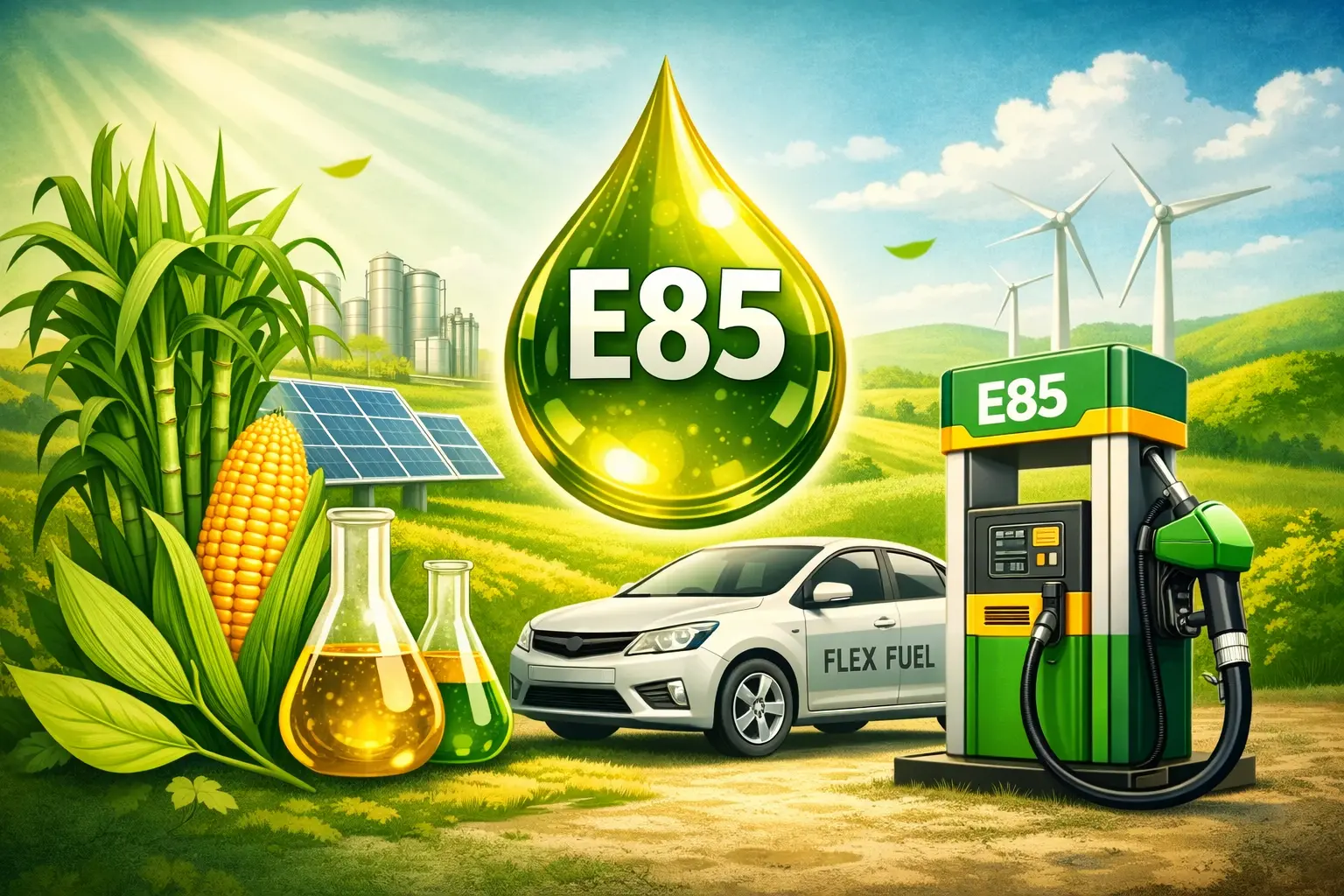
E85 is a blend of 80–85% ethanol and 15–20% petrol. Ethanol is an alcohol derived from crops like sugarcane and corn. By mixing it with petrol, India aims to reduce dependence on imported crude oil and promote cleaner energy.
Unlike regular petrol or E20 (20% ethanol blend), E85 is designed for Flex‑Fuel Vehicles (FFVs). These vehicles have engines calibrated to handle high ethanol content without damage.
🌍 Why Is India Introducing E85?
The government’s push for E85 is part of a larger clean energy roadmap. The goals are clear:
- Reduce oil imports: India imports nearly 90% of its crude oil. Ethanol blending cuts this reliance.
- Lower emissions: Studies show E85 can reduce greenhouse gas emissions by up to 61% compared to fossil fuels.
- Support farmers: Ethanol production creates demand for sugarcane and other crops, boosting rural incomes.
- Energy diversification: By offering multiple fuel options, India strengthens its energy security.
💰 Price Advantage
One of the biggest talking points is cost.
- Delhi price (June 2026): ₹82.12 per litre.
- Regular E20 petrol: ₹102.12 per litre.
That’s a saving of ₹20 per litre at the pump.
⚠️ However, ethanol has lower energy density than petrol. Vehicles running on E85 may consume 25–35% more fuel compared to E20. So while the per‑litre price is lower, the mileage may drop, balancing out the savings.
🚗 Who Can Use E85?
This is where confusion arises.
- ✅ Flex‑Fuel Vehicles (FFVs): Specially designed to run on ethanol blends up to E100. Examples include new variants of Maruti Suzuki WagonR and Hero Splendor+ motorcycles.
- ❌ Regular petrol/E20 cars: Not compatible. Using E85 in these vehicles can damage the engine and void warranties.
If you’re unsure, check your vehicle’s manual or consult the manufacturer before filling up.
Flex‑Fuel Vehicles (FFVs)
Flex‑Fuel Vehicles (FFVs) are specially engineered automobiles that can run on multiple fuel types, typically ethanol‑petrol blends such as E20, E85, or even pure ethanol (E100).
How FFVs Work
- Smart fuel sensors detect the ethanol percentage in the tank and automatically adjust the air‑fuel mixture and ignition timing.
- Modified fuel systems use corrosion‑resistant materials to handle ethanol’s chemical properties.
- Engine control units (ECUs) are programmed to optimize performance and emissions for any blend ratio.
📍 Availability
E85 is currently in its pilot phase:
- 48 fuel stations across Delhi, Mumbai, Pune, and Nagpur.
- Expansion plan: 500 outlets by end of 2026, and 5,000 outlets by 2027.
This phased rollout ensures infrastructure and consumer awareness grow together.
⚡ Benefits of E85
- Cheaper fuel option for FFV owners.
- Cleaner emissions, contributing to India’s climate goals.
- Boosts agriculture by creating demand for ethanol crops.
- Energy independence, reducing reliance on imported oil.
⚠️ Limitations of E85
- Lower mileage due to reduced energy density.
- Limited availability — only select cities for now.
- Vehicle compatibility — only FFVs can use it safely.
- Infrastructure challenges — storage and distribution of ethanol blends require upgrades.
📈 Future Outlook
E85 is not a replacement for petrol or E20 — at least not yet. Instead, it’s an alternative fuel option for those with compatible vehicles. As automakers roll out more FFVs and fuel stations expand, adoption will grow.
The government’s vision is clear: by 2030, India wants a significant share of its vehicles running on ethanol blends, reducing carbon emissions and strengthening energy independence.
❓ FAQs About E85 Fuel
1. Is petrol being discontinued in India? No. Petrol and E20 remain available. E85 is an additional option for FFVs.
2. Can I use E85 in my current car? Only if it’s a Flex‑Fuel Vehicle. Regular cars are not compatible.
3. Will E85 save me money? Per litre, yes. But mileage may drop, so actual savings depend on your driving pattern.
4. Where can I buy E85 fuel? Currently in Delhi, Mumbai, Pune, and Nagpur. More outlets will open in 2026–27.
5. Why is E85 better for the environment? It reduces greenhouse gas emissions and promotes renewable energy from crops.
🏁 Conclusion
E85 fuel is a bold step toward a cleaner, cheaper, and more self‑reliant India. But it’s not for everyone — only Flex‑Fuel Vehicle owners can benefit right now. For them, E85 offers savings at the pump and a greener footprint.
As availability expands and more FFVs hit the market, E85 could become a mainstream choice. Until then, it remains a promising but niche option in India’s evolving fuel ecosystem.
you can checkout about e-85 @ https://www.cartoq.com
check other blogs –
https://newzonics.com/hormuz-in-turmoil-chinas-bold-masterstroke/