Iran Iraq USA War 2026 is causing the Middle East is once again at the center of global attention as tensions involving Iran, Iraq, and the United States continue to dominate international headlines in 2026. What began as a confrontation between Iran and a U.S.-Israeli coalition has evolved into a broader regional crisis affecting energy markets, international trade, security alliances, and diplomatic relations across the world.
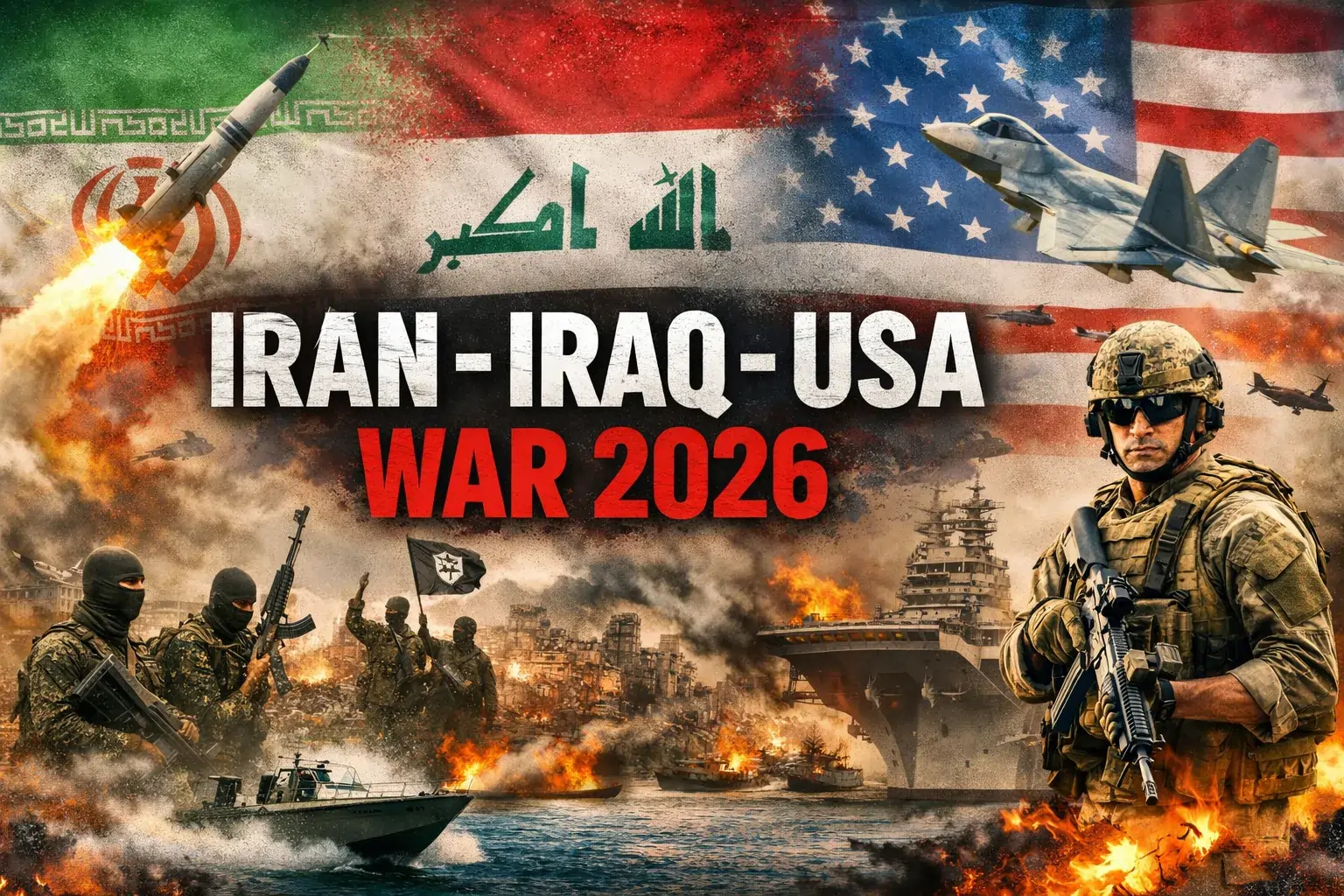

Iran Iraq USA War 2026
Iran Iraq USA War 2026 erupted as a chain reaction of failed diplomacy and escalating military strikes, reshaping the geopolitical balance of the Middle East. Iran Iraq USA War 2026 became a turning point in modern warfare, marked by drone swarms, oil blockades, and cyber offensives that reverberated across global markets. Iran Iraq USA War 2026 stands as a stark reminder of how regional rivalries can ignite worldwide consequences.
For millions of people watching developments unfold, the key question remains: How did the conflict escalate, what role does Iraq play, and what could happen next?
How the Crisis Began
The current conflict traces its roots to growing tensions over Iran’s nuclear program, regional influence, and long-standing disputes with the United States and its allies. In late February 2026, large-scale military strikes against Iranian targets dramatically escalated the situation, leading to retaliatory actions and a wider regional confrontation.
Following the strikes, Iran responded through missile launches, drone operations, and actions affecting maritime traffic in the Persian Gulf. The crisis quickly expanded beyond Iran’s borders and began influencing neighboring countries, particularly Iraq.
Why Iraq Matters
Iraq occupies a strategically important position between Iran and the wider Middle East. The country maintains economic, political, and security relationships with both Tehran and Washington.
As tensions intensified, Iraq found itself in a difficult position. The country hosts important infrastructure, security forces, and various armed groups with differing political loyalties. Several regional developments have placed Iraq at the center of diplomatic and security concerns throughout the crisis.
Analysts believe Iraq’s stability is crucial because any significant escalation inside the country could affect oil production, trade routes, and broader regional security.
The Strait of Hormuz and Global Energy Markets
One of the most important aspects of the crisis has been the Strait of Hormuz, a narrow waterway through which a significant portion of the world’s oil exports pass.
Any disruption in this region has immediate consequences for global energy prices. Concerns over shipping safety, military activity, and restrictions on maritime traffic have caused fluctuations in oil markets throughout 2026.
For consumers in the United States, United Kingdom, Europe, and Asia, instability in the Gulf can translate into higher fuel prices, increased transportation costs, and broader inflationary pressures.
Economic Impact on Iraq
Iraq’s economy depends heavily on oil exports. As regional tensions increased, concerns emerged about production levels, export routes, and investor confidence.
Financial analysts have warned that prolonged instability could affect Iraq’s economic growth and government revenues. Credit agencies and market observers continue monitoring developments closely because the country’s energy sector remains a critical component of the global oil supply chain.
The Iraqi government faces the challenge of maintaining internal stability while navigating competing regional interests.
Military and Security Concerns
The crisis has also highlighted the evolving nature of modern warfare. Instead of relying solely on conventional military operations, the conflict has involved drones, missile systems, cyber capabilities, intelligence operations, and maritime security measures.
Military analysts note that technological advancements have allowed regional actors to project influence across wider geographic areas while avoiding direct large-scale ground conflicts.
This trend is likely to shape future security strategies throughout the Middle East.
Diplomatic Efforts and Peace Negotiations
Despite military tensions, diplomatic channels remain active.
Recent reports suggest that negotiations involving multiple regional and international stakeholders have intensified, with discussions focusing on maritime security, sanctions, economic measures, and future nuclear-related agreements. Several mediators have attempted to bridge differences between the parties involved.
While optimism has increased in recent weeks, officials continue to caution that significant disagreements remain unresolved.
Diplomacy remains the preferred path for many governments seeking to prevent a broader regional conflict.
Impact on Global Trade
The consequences of the crisis extend far beyond the Middle East.
International shipping companies, airlines, energy firms, and financial markets have all been affected by uncertainty surrounding regional security. Some flight routes have been adjusted, while businesses continue monitoring potential disruptions to supply chains and transportation networks.
As global economies become increasingly interconnected, events in the Gulf region can quickly influence markets across North America, Europe, and Asia.
What Happens Next?
The future of the Iran-Iraq-U.S. crisis depends on several factors:
- Progress in diplomatic negotiations
- Security conditions in the Gulf region
- Stability within Iraq
- Energy market developments
- International political support for de-escalation
Many experts believe the coming weeks could prove decisive. Positive diplomatic outcomes could reduce tensions and stabilize markets, while renewed military incidents could prolong uncertainty.
Final Thoughts
Iran-Iraq-USA-war-2026 causing Middle East crisis demonstrates how regional conflicts can have global consequences. Iran, Iraq, and the United States remain key players in a complex geopolitical environment where security, energy, diplomacy, and economics are deeply interconnected.
For people around the world, the situation serves as a reminder that events in strategically important regions can influence everything from fuel prices and investment markets to international relations and global stability.
As negotiations continue and leaders seek pathways toward de-escalation, the world will be watching closely to see whether diplomacy can succeed where confrontation has struggled.
To read more visit : BBC News – Middle East conflict updates
Discover other guides from our vast content –